


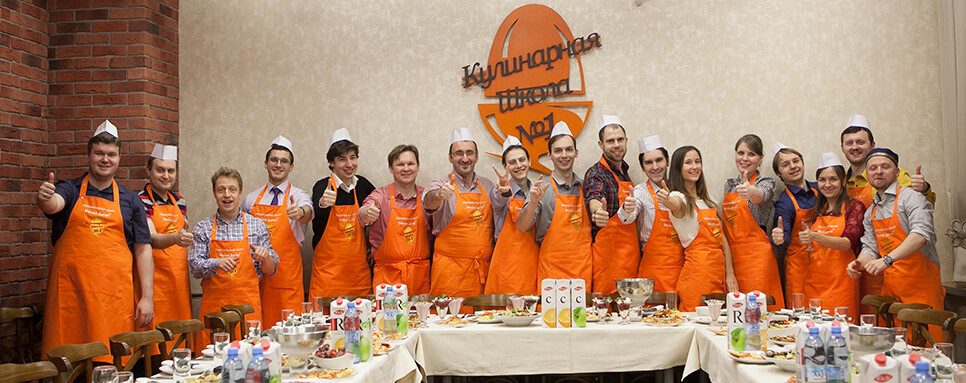
Culinary tour. St. Petersburg: Dive into the gastronomic heritage of the Northern capital with Culinary School No. 1
St. Petersburg has long ceased to be just a geographical point on the map of the Russian Federation. This is a living organism, breathing history, architecture, art and, which is especially important for the modern traveler, unique gastronomic identity. City, founded as a "window to Europe", for three centuries, absorbed the culinary traditions of various peoples, transforming them into something original, recognizable and deeply rooted in the St. Petersburg cultural code. This is where the recipes were born, which later became the hallmark of all Russian cuisine. This is where European chefs, invited by the imperial court, for the first time introduced the Russian aristocracy to the techniques of haute French gastronomy, adapting them to local products and the harsh climate of the northwest. It is here, in narrow courtyards and noisy markets, street food was formed, has become an integral part of urban everyday life. And just today, in the era of conscious travel, when a tourist is looking for more than just spectacle, and meanings, emotions and personal involvement, culinary tour comes to the fore as one of the most popular formats of cultural and educational tourism.
Our company "Culinary School No. 1» in St. Petersburg offers guests of the city more than just a tour with tasting, a full-fledged immersive experience, in which each participant becomes a non-observer, and the creator. Culinary tourism performed by our school is a synthesis of historical enlightenment, practical master class, cultural dialogue and gastronomic pleasure. We don’t just talk about dishes – we give you the opportunity to touch them, feel the texture of the dough, hear the hissing of oil in a hot frying pan, catch the aroma of spices, for centuries traveling along the Silk Road and the Baltic Sea, and, Vinaigrette with baked vegetables and beans - a classic for all generations, try the result of your own efforts, which carries the reflection of imperial dinners, noble estates and Soviet communal kitchens.
The modern traveler has changed. A photo report from a museum or a standard dinner in a restaurant with a tourist menu is no longer enough for him.. He wants to understand, why is it cooked this way?, what historical events influenced the formation of the recipe, what techniques were used before the advent of modern kitchen appliances, how climate and logistics determined the product mix, and how does all this reflect the mentality of the people. Culinary tour in St. Petersburg, developed by our specialists "Culinary school number 1», answers all these requests. We created the program, which balances between academic depth and practical accessibility, between historical authenticity and modern comfort, between individual experience and group dynamics.
Our approach is based on the principle “through hands - to understanding”. We are convinced, that cooking is not just a set of instructions, and the tongue, spoken by generations. Prepared a dish, you not only master the technology, but also enter into dialogue with the era, with people, who came up with, improved and passed on this recipe. Do you feel, how the texture changed, how the proportions were adapted, how the essence was preserved, despite the wars, revolution, economic crises and cultural transformations. This is the essence of culinary tourism - time travel through taste, aroma and tactile sensations.
Participants will be able to get acquainted in detail with the cuisine of Russia and the CIS countries
Culinary tourism in the format "Culinary school number 1» is not limited exclusively to St. Petersburg or Russian recipes. We consciously expand the gastronomic horizons of participants, including in the program elements of cuisines of the CIS countries, which allows us to create a holistic picture of the Eurasian culinary space. Russia has never existed in isolation. For centuries, its territories have been an arena of cultural exchange, trade routes, migration processes and political unions. Each region, every republic, each ethnic group contributed to the overall gastronomic palette, and St. Petersburg, as an imperial and Soviet capital, became a natural center for the synthesis of these traditions.
Independent preparation by participants of all dishes according to the selected menu
Our philosophyCulinary school number 1» is based on the principle of active participation. We don’t believe in the “chef cooks, guest watches” format. Our culinary tour designed like this, so that each participant goes through the full cycle of creating a dish: from preparation of ingredients to final serving. This is not an imitation, not a demonstration, no tasting of the finished product. This is a complete practical experience, in which the hands, eyes, smell and taste work in synergy, developing sustainable skills and a deep understanding of the process.
Master class program: Dishes, which you will prepare
Under the guidance of our chefs you will master the preparation of the following dishes:
– Leningradsky rassolnik
Leningradsky rassolnik is not just a soup. This is a gastronomic monument, a testament to resilience, adaptability and culinary ingenuity in conditions of extreme scarcity. Its roots go back to traditional Russian cuisine, where rassolnik was prepared using pickled cucumbers, pearl barley and meat broth. However, it was in besieged Leningrad and in the post-war years that this recipe underwent significant changes, becoming a symbol of survival and memory.
As part of our culinary tour, participants prepare rassolnik according to an adapted, but a historically based version. Main ingredient: pearl barley. We explain, why exactly did it become the basis: pearl barley was available, was stored for a long time, gave a feeling of satiety, did not require complex processing. Participants learn to wash cereal correctly, soak it to speed up cooking, control the degree of cooking, to preserve texture, but don't let it turn into mush.
Pickles are the second key ingredient. We use barrel cucumbers, aged by traditional lactofermentation method. Who said, how lactic acid bacteria create that very sour, but not a strong taste, which is typical for authentic rassolnik. We show, how to cut cucumbers, when to add them to the broth (not at the beginning, so as not to destroy the structure, but not at the end, to give away the taste), how to use brine to adjust the acidity of soup.
The broth is prepared on beef bones with the addition of roots. (parsley, celery, carrot). Participants learn how to remove foam, control temperature (slow languor, not boiling), keep the broth for at least 3 hours for collagen and mineral extraction. Then the broth is strained, enriched with vegetables (potato, carrot, onion), brought to readiness.
The final stage is balancing the taste. Bay leaf is added, black pepper, fresh herbs. Participants try, adjust salinity, acid, saturation. Pickle is served hot, with sour cream and rye bread. This dish does not require sophistication - it requires respect for tradition, understanding history, willingness to accept simplicity as a form of depth.
– donuts
Donuts are the St. Petersburg equivalent of French beignets, but with its own history and character. Their appearance is associated with the influence of European confectionery culture in the 18th–19th centuries., when the first confectionery shops opened in the city, foreign masters were invited, demand for sweet street food was formed. However, it was during Soviet times that donuts became a mass phenomenon.: they were sold in specialized stalls, they were available, hearty, quick to prepare.
Dough for donuts - yeast, butter, with added eggs, Dieticheskaya-vypechka-1, creamy milk. Participants learn to activate yeast, control liquid temperature (no higher than 38°C, so as not to kill the culture), knead the dough until elastic, leave it to rise in a warm place without drafts. We explain, Why is this structure important?: air bubbles, formed during fermentation, create a porous texture, which expands when fried, but it doesn't burst.
Frying occurs in a large amount of vegetable oil at a temperature of 170–180°C. Participants learn to check temperature without a thermometer (by the behavior of a wooden stick), dip the dough in portions, control time (1,5–2 minutes on each side), Place on paper towels to remove excess oil. The final touch is a generous sprinkling of powdered sugar.. We show, how powder interacts with a warm surface, creating a thin crust, how it melts at the first bite, How the contrast between the crispy outer shell and the soft interior shapes the character of a crumpet.
This dish teaches balance.: between sweetness and neutrality, between crunch and softness, between simplicity and thoroughness of execution. It does not pretend to be high gastronomy, but requires precision, attention and respect for details.
– Arina Rodionovna's pancakes
Arina Rodionovna’s pancakes are not just a recipe, this is a cultural code, associated with the name of the nanny of Alexander Sergeevich Pushkin. Arina Rodionovna Yakovleva, serf peasant woman, brought the traditions of Russian folk cuisine to the Pushkin family, among which a special place was occupied by pancakes on sourdough, using natural yeast, milk, flour and salt.
On our culinary tour, participants prepare pancakes according to a historically based version. Base – dough, which is prepared in advance: pain, warm milk, yeast, sugar, salt is mixed and left for 1–2 hours to activate fermentation. Participants learn to recognize signs that the dough is ready: increase in volume by 2–3 times, appearance of bubbles, characteristic sour aroma. The dough is then mixed with the remaining ingredients (eggs, vegetable oil, warm water), the dough is still resting 30 minutes.
Frying takes place in a well-heated frying pan., lubricated with a thin layer of oil. Participants learn to pour dough, distribute it evenly over the surface, control temperature (too high and it will burn, too low - it won’t bake), turn with a spatula at the right time (when the edges are dry, and the surface is covered with bubbles). Ready pancakes are stacked, covered with a towel to keep warm and soft.
Presentation – classic: with sour cream, jam, honey, caviar or just with sugar. We explain, why pancakes became a symbol of Maslenitsa, How are they related to the solar cult?, why is their shape round?, why are they eaten with hands in traditional culture. This dish teaches patience, attention to fermentation, respect for the cycles of nature, understanding the connection between food and the calendar.
– A bit more Skobelevsky
Skobelevsky-style meatballs are a dish with military history, named after General Mikhail Dmitrievich Skobelev, hero of the Russian-Turkish War of 1877–1878. Although there is direct documentary evidence of this, that he came up with this recipe, No, the name became entrenched in the culinary tradition as a reference to army cuisine, where hearty food was needed, easy to prepare, but delicious dishes.
Based on minced beef and pork (ratio 2:1 to balance taste and fat content), onion, egg, semolina or breadcrumbs, spices. Participants learn how to mix minced meat correctly (do not mix too vigorously, so as not to make it tight), form oval shaped balls, roll them in breadcrumbs, fry until golden brown, then cook in the oven or simmer in sauce.
The sauce is prepared based on broth, sour cream, tomato paste, flour. Participants learn how to sauté, gradually introduce liquid, control thickening, balance the taste. The finished meatballs are poured with sauce, served with mashed potatoes or boiled rice.
This dish teaches practicality, adaptability, respect for resources. It does not require expensive ingredients, but requires precision in proportions, temperature control, attention to texture.
– Befstroganov from beef
Beef Stroganoff is one of the most famous Russian dishes in the world., named after Count Alexander Grigorievich Stroganov. Legend says, that it was invented by a French chef, worked in the Stroganov house in Odessa or St. Petersburg in the 19th century. The recipe combines French sauce techniques with Russian ingredients.
Participants prepare beef stroganoff from beef tenderloin, cut into thin strips across the grain. The meat is quickly seared over high heat to seal in the juices., then removed. The sauce is prepared in the same pan: the onion is sautéed, flour is added, broth, cream, tomato paste, spices. The meat is returned to the sauce, simmer over low heat for 10–15 minutes. Served with mashed potatoes, noodles or rice.
This dish teaches time control, texture balance, respect for the quality of ingredients, understanding that, how simple techniques can create complex flavors.
Each of these dishes is not just a recipe, and history, culture, technology, emotion. And it is through their preparation that participants learn the essence of St. Petersburg gastronomy.
Culinary tourism for travel agents
Culinary tourism for Travel Agents – this is not just an additional product in the catalog. This is a tool to increase customer loyalty, increase in average check, differentiation in the market. The modern tourist is looking for a unique experience, and culinary tour in St. Petersburg meets this request perfectly.
We offer agents: ready-made marketing materials, training according to the program, commission schemes, flexible tariffs, booking support, possibility of customization for the client. Culinary tourism in St. Petersburg is becoming a competitive advantage, allowing you to attract a premium audience, corporate groups, foreign guests.
Culinary tourism for travel agencies
For travel agencies we offer B2B partnership: package solutions, corporate programs, white-label options, API integration, joint marketing campaigns. Culinary tourism for Travel Agents and Travel Agencies is a scalable product with high margins, low seasonality and high repeat sales potential.
We provide logistics support, legal support, insurance, multilingual materials, adaptation to different markets. Culinary tour in g. St. Petersburg becomes part of a comprehensive tourism offer, strengthening the agency's positioning.
The duration of the entire event is 2,5 o'clock.
Venue and schedule
Cooking national dishes in our schoolCulinary School No. 1» is not just a culinary studio in St. Petersburg, and the whole ecosystem, a unifying passion for cooking, joy of communication and professional approach. We have two conveniently located studios -
on Moscow Avenue, 207 and on Lesnoy Prospekt, 73.
Both sites are equipped with modern equipment, spacious work areas and create the atmosphere of a real culinary workshop, where every guest feels at home.
You can find out the schedule of upcoming master classes, by visiting our website – on the page “Schedule».
Culinary tour in St. Petersburg from "Culinary school number 1" - this is not just a master class. It's time travel, culture, taste. This is an opportunity to become part of history., create something with your own hands, take with you not only the recipe, but also understanding. We invite you to touch the heritage, who lives in the kitchen, in hands, in aroma, on balance.
Cooking national dishes in our schoolCulinary School No. 1» — we teach you how to cook with taste!
Welcome to "Culinary school №1»!!!